Adam Smith'in Tek Seferde Serbest Piyasayı Özetlediği Kavram: Görünmez El
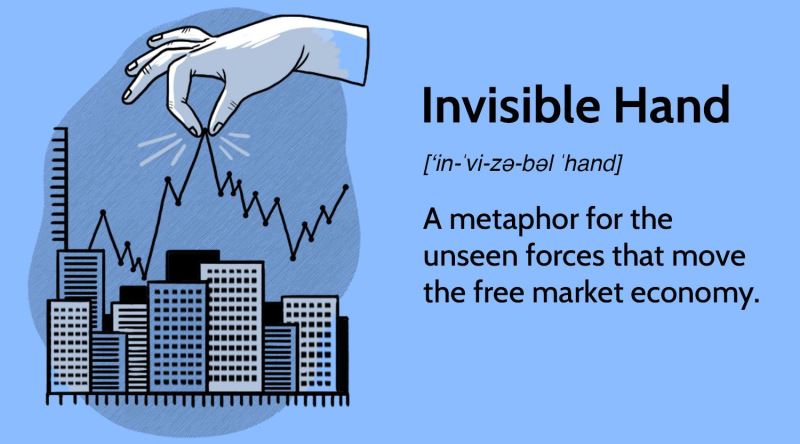
Nedir bu?
iktisat biliminin babası ve klasik iktisadın kurucusu olarak kabul gören adam smith milletlerin zenginliği (wealth of nations) adlı kitabında görünmez el ile ilgili olarak şöyle buyurmuştur:
"her fert kapitalini elinden geldiği kadar yurtiçi sanayii desteklemek için ve bu sayede mümkün olan en yüksek kıymeti üretmek için kullanacağından, herkes zorunlu olarak toplumun yıllık gelirini yapabildiği ölçüde en yüksek seviyeye ulaştırmak için çalışır. fert genellikle aslında ne toplumsal çıkarı teşvik etmeye niyetlenir ne de onu ne kadar teşvik ettiğini bilir. yurtiçi sanayiyi yabancı sanayiye karşı desteklemeyi tercih etmekle ferde sadece kendi güvenliğini gözetir; ve kazancını düşünür ve fert bu durumda, diğer durumlarda olduğu gibi, bir görünmeyen el tarafından tasarıları içinde yer almayan bir amacı teşvik etmiş olur."
yani diyor ki, birey kendi çıkarlarını gözeterekten toplumun geneline hizmet eder. spontane düzenin diğer kurumları da bireyin faaliyetleri sonucu kişisel çıkara dayalı tepkilerin bütününden doğar ve tüm toplumun faydasına olan neticeler ortaya çıkarır. hasılı, ideal ekonomik ortam, olağan düzenin sınırları içerisinde kendiliğinden zuhur eder.
görünmez el teorisi diye bir şey yoktur, adam smith bu kalıbı sadece bir kere, şu şekilde kullanmıştır
"by preferring the support of domestic to that of foreign industry, he intends only his own security; and by directing that industry in such a manner as its produce may be of the greatest value, he intends only his own gain, and he is in this, as in many other cases, led by an invisible hand to promote an end which was no part of his intention."*
smith'in yazdığı onca şeyden tutup da bu kalıbı çekip almak ve kendisini ultra liberal bir adam olarak lanse etmek, en hafif terimiyle, haksızlıktır. herkes kendi çıkarının peşinde olursa, toplumda ortaya çıkacak şey sadece küçük olumsuz dışsallıklar değil, kocaman bir sınıf çatışmasıdır.
bir hatırlatma yapalım. klasik siyasal iktisat bireylere bakıp değişim anında faydaları değil, üretimde ortaya çıkan emekten kaynaklanan değerin bölüşümünü incelemektedir. yapılan sınıfsal bir analizdir ve toplumdaki çatışmaların gayet de farkındadır hem smith hem de ricardo. smith'den vermekten bıkmadığım bir referansla bitireyim:
"the interest of the dealers, however, in any particular branch of trade or manufactures, is always in some respects different from, and even opposite to, that of the public..the proposal of any new law or regulation of commerce which comes from this order ought always to be listened to with great precaution, and ought never to be adopted till after having been long and carefully examined, not only with the most scrupulous, but with the most suspicious attention. it comes from an order of men whose interest is never exactly the same with that of the public, who have generally an interest to deceive and even to oppress the public, and who accordingly have, upon many occasions, both deceived and oppressed it."**
*http://www.adamsmith.org/smith/won-b4-c2.htm
**http://www.adamsmith.org/…lusion-of-the-chapter.htm
invisible hand konseptinin adam smith tarafından farklı bir anlam ile kullanılıp kullanılmamasına ilişkin çıkan tartışmaları sonsuza kadar bitirmek için geldim!
birçok insanın da sosyal medyada, ekşi'de belirttiği üzere bu terim adam smith tarafından günümüzde ekonomi disiplininde kullanıldığı anlamda kullanılmamıştır. ama aynı zaman da kullanılmıştır da. çünkü smith the wealth of nations'da bizim ileride görünmez el olarak isimlendireceğimiz market karakteristiklerinden gerçekten de bahsetmiştir. yani aslında smith bize görünmez el konseptini anlatmıştır, sadece onu görünmez el olarak adlandırmamıştır.
o zaman smith görünmez el'den hiç bahsetmedi de biz mi onun konseptlerini bu şekilde adlandırdık? hayır, lanet olsun ki bahsetti ve tüm bu kavram kargaşasını yarattı. tüm kitaplarında topu topu üç kere bu kelime öbeğini kullanıyor. bu üç kullanımı ve kitapları dışındaki kullanımını da incelersek, smith'in görünmez el metaforunu bireyleri (toprak sahibini ya da işadamını) onlar farkında bile olmadan ve onlar istemeseler bile bir şeyler yapmaya iten bir güç olarak kullanmış. özel ve spesifik bir anlam yüklememiş.
bu yüzden liberalizm karşıtları lütfen artık "olumm sizin adamınız adam smith bile görünmez ele inanmıyor laaa" ya da "olum amerika sizi yiyo, adam smith aslında komünistti" gibi eleştiriler ile kapitalizmi çökertmeye çalışmasınlar.
bana inanmazsınız diye aşağıya bizzat smith tarafından nasıl kullanılmış olduğunu yazdım bu metaforun. bu iki kitapta da gördüğünüz üzere spesifik bir anlamdan (veya bizim bugün anladığımız anlamdan) ziyade geniş manada bir bireyi bir şey yapmaya iten güç olarak kullanılmış.
1. ilk olarak the theory of moral şentiments kitabında rastlıyoruz görünmez el konseptine. kitapta bencil toprak sahibinin adeta görünmez bir el tarafından yönlendirilerek hasatı onun için çalışanlara dağıtmasından bahsediyor. burada toprak sahibi çok iyi biri ondan dağıtır demiyor. aksine toprak sahibinin bencil olduğundan, imkanı olsa hasatın tamamını kendisinin yiyeceğinden ama midesinin yeteri kadar büyük olmadığından bahsediyor. zengin'in farkında bile olmadan, istemeyerek de olsa hasatı orada yaşayanlara dağıtmak zorunda kalacağını söylüyor.
2. 17 yıl geçti, şimdi de görünmez el ifadesini the wealth of nations kitabında kullanıyor adam. ama yazının en başında da dediğim gibi bizim bildiğimiz görünmez eli anlatan kısım kitabın farklı bir bölümü, smith'in buradaki kullanımının ise o kısım ile pek bir alakası yok. burada iş sahibinin başka ülkeler yerine kendi ülkesine yatırım yapmayı tercih edeceğini ve onu bu tercihi yapmaya adeta bir görünmez elin zorlayacağından bahsediyor.
kitaplardaki orijinal paragraflar:
1. "the proud and unfeeling landlord views his extensive fields, and without a thought for the wants of his brethren, in imagination consumes himself the whole harvest ... [yet] the capacity of his stomach bears no proportion to the immensity of his desires ... the rest he will be obliged to distribute among those, who prepare, in the nicest manner, that little which he himself makes use of, among those who fit up the palace in which this little is to be consumed, among those who provide and keep in order all the different baubles and trinkets which are employed in the economy of greatness; all of whom thus derive from his luxury and caprice, that share of the necessaries of life, which they would in vain have expected from his humanity or his justice...the rich...are led by an invisible hand to make nearly the same distribution of the necessaries of life, which would have been made, had the earth been divided into equal portions among all its inhabitants, and thus without intending it, without knowing it, advance the interest of the society..."
2. "but the annual revenue of every society is always precisely equal to the exchangeable value of the whole annual produce of its industry, or rather is precisely the same thing with that exchangeable value. as every individual, therefore, endeavours as much as he can both to employ his capital in the support of domestic industry, and so to direct that industry that its produce may be of the greatest value, every individual necessarily labours to render the annual revenue of the society as great as he can. he generally, indeed, neither intends to promote the public interest, nor knows how much he is promoting it. by preferring the support of domestic to that of foreign industry, he intends only his own security; and by directing that industry in such a manner as its produce may be of the greatest value, he intends only his own gain, and he is in this, as in many other cases, led by an invisible hand to promote an end which was no part of his intention. nor is it always the worse for the society that it was not part of it. by pursuing his own interest he frequently promotes that of the society more effectually than when he really intends to promote it. i have never known much good done by those who affected to trade for the public good. it is an affectation, indeed, not very common among merchants, and very few words need be employed in dissuading them from it."
Türkiye'de Yeni Duyulan Bir Kavram Olan Sugar Daddy Nedir?